Read a VABS Input File#
Problem Description#
Given a VABS cross-section input file, read it into a structure gene object to inspect mesh statistics and material assignments before running analysis.
Solution#
"""Example: Read VABS Input File

This example demonstrates how to read a VABS input file and inspect
the structure gene data.

The example reads a VABS 4.0 format file for an Euler-Bernoulli beam
cross-section model.
"""
import logging
from pathlib import Path

import sgio

logging.basicConfig(level=logging.INFO)
cwd = Path(__file__).resolve().parent

# Define the input file path
input_file = str(cwd / 'sg21eb_tri3_vabs40.sg')

# Read the VABS input file
# - file_format='vabs': Specifies VABS format
# - model_type='BM1': Euler-Bernoulli beam model (classical beam theory)
sg = sgio.read(
    input_file,
    file_format='vabs',
    model_type='BM1'
)

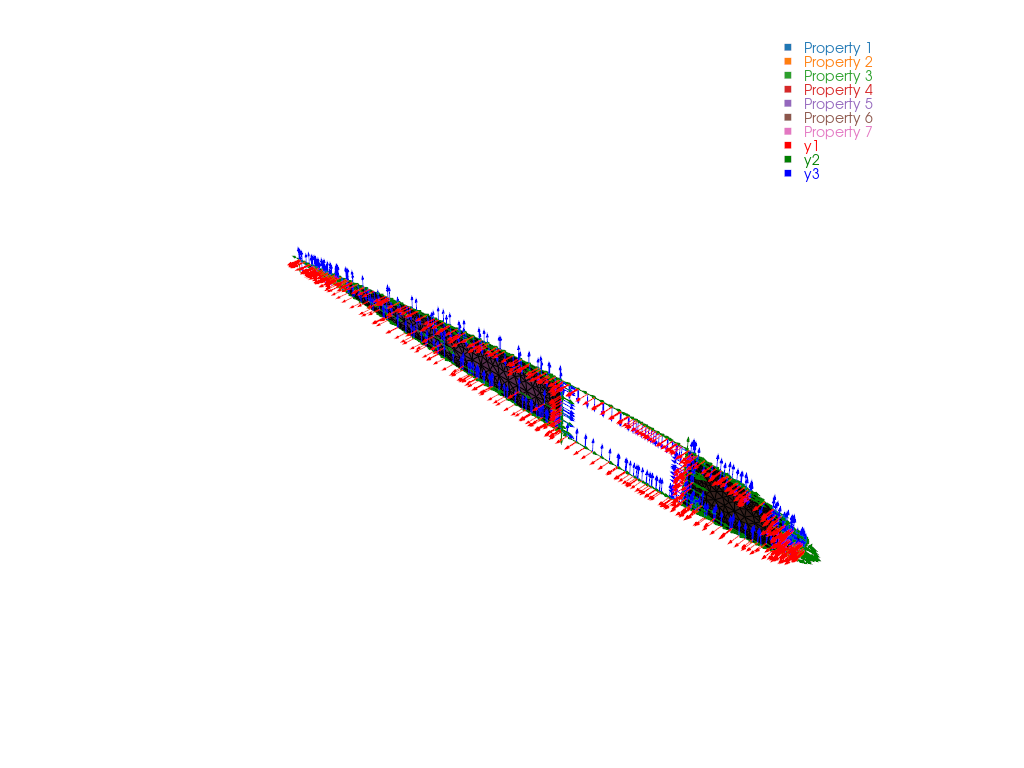
plotter = sgio.plot_sg_pyvista(
    sg,
    show_local_axes=True,
)
plotter.off_screen = True
plotter.show(screenshot=str(cwd / "pyvista.png"), auto_close=False)
plotter.close()

print(sg)
file_format='vabs' selects the VABS reader. model_type='BM1' tells SGIO to interpret the file as an Euler-Bernoulli cross-section. Use 'BM2' for Timoshenko.
Result#
The script prints the node count, element count, material count, and the full structure gene object to the console.
File List#
run.py: Main Python script
sg21eb_tri3_vabs40.sg: VABS 4.0 cross-section input file
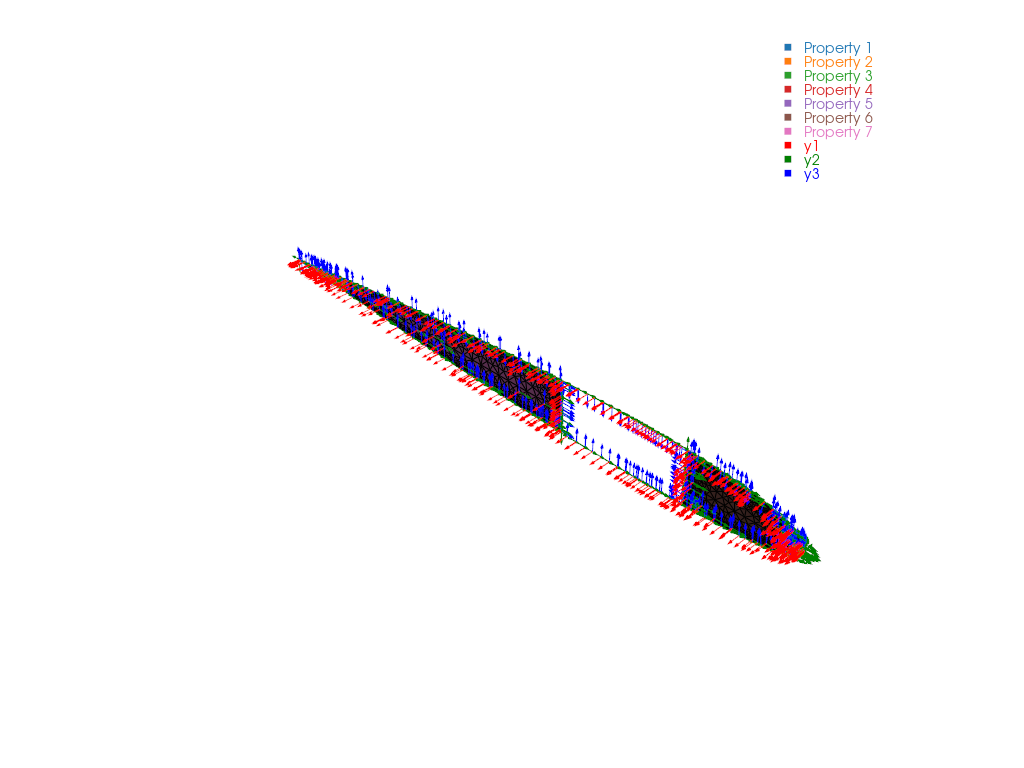
pyvista.png: PyVista mesh preview